Guide
How e-reader and E Ink tablet pricing actually works
We don't publish prices here — they're out of date within weeks, and a stale number reads as a current fact. What doesn't go stale is the mechanics behind the number. Here's how to size up any listing yourself in about five minutes.
The panel is the single biggest cost driver
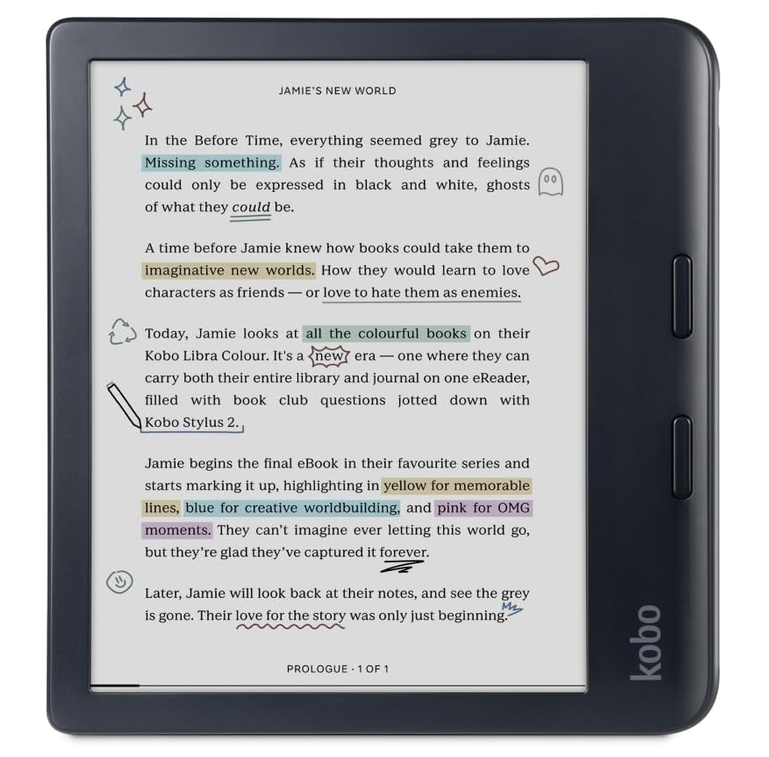
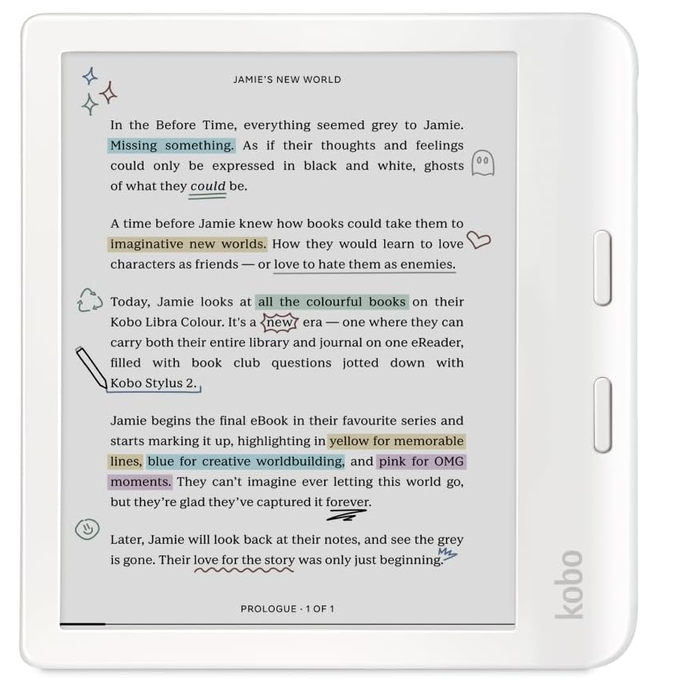
Across Kobo, Boox, and Meebook, the display is the most expensive component, and three things move its cost more than anything else: size, whether it's color or black-and-white, and whether it includes a digitizer layer for a stylus. A color E Ink panel (Kobo's Kaleido, Meebook's Kaleido-based M8C panel, Boox's color line) costs meaningfully more to manufacture than the equivalent black-and-white panel at the same size, because it uses an additional color filter layer that also slightly reduces brightness and sharpness compared to B&W. A stylus-capable digitizer is a separate added layer again. That's why, within any one brand's lineup, the size and panel type alone tell you roughly where a given model sits relative to its siblings — before you look at anything else.
Ecosystem subsidy — or the lack of it
Kobo (like Kindle) sells hardware as part of a bundle with a bookstore it expects to sell you books through afterward, which gives it room to price hardware closer to cost and make margin back on content and subscriptions over time. Boox and Meebook don't have a bookstore to recoup from — they're Android tablets with no attached storefront — so their hardware pricing has to stand on its own margin from day one. That's a structural reason open-platform Android E Ink devices don't necessarily undercut single-purpose readers by as much as you'd expect from smaller, less-known manufacturers.
Release timing moves price more than most people expect
Every line on this site gets replaced on a cycle — Kobo's Clara/Libra generations, Boox's Go/Note/Tab series, Meebook's M-series. A listing for the newest generation of any of these carries a premium simply for being current; the previous generation of the same size and panel type typically gets discounted once a successor ships, sometimes substantially. Before treating any single listed price as "the" price for a category, it's worth checking whether a newer generation has already been announced — if so, you're likely looking at either an early-adopter premium or a soon-to-drop older model, not a stable market price.
Five-minute check before you trust a number
Open the specific listing you're considering and look for three things: whether there's a clippable coupon or a "20% off" style promotion applied at checkout rather than shown in the headline price (common on Boox and Meebook listings specifically); the model's release date, findable in the listing's product information or a quick search of the exact model name, so you know whether a successor is likely imminent; and — if you want a sanity check against manufacturer pricing — whether the brand's own store (kobo.com, shop.boox.com, themeebook.com) lists the same model, since a large enough gap between the brand's own price and the listing price is itself informative about which one is the outlier.